
Directory Submission vs Guest Blogging for SEO
Compare directory submission vs guest blogging for SEO in 2026. Learn which strategy drives better results for your website's ranking.

Directory Submission vs Guest Blogging for SEO
Directory submission provides foundational discovery for new domains, listing a website in relevant online catalogues to aid initial indexing and basic visibility. Guest blogging, conversely, is a high-authority link-building tactic that secures powerful backlinks from established sites, directly impacting domain authority and organic traffic potential.
Key Characteristics:
- Directory Submission: Initial indexing, foundational links, domain discovery.
- Guest Blogging: High-authority backlinks, domain rating boost, targeted organic traffic.
Many founders in 2026 dismiss directory submissions as an archaic tactic. And they have a point; indiscriminate mass submissions are pure spam. But for new startups, knowing when to use directories for baseline visibility and when to scale with guest blogging for real authority makes all the difference. Think of a directory listing as your initial business license – essential for legitimacy. Guest blogging? That’s your keynote speech at an industry conference.
By the end of this guide, you will strategically leverage both directory submission and guest blogging using a clear, phased link-building strategy, without wasting resources on outdated or ineffective tactics for your startup's organic growth.
What is the difference between directory submission and guest blogging?
Directory submission focuses on listing your website in specialized online catalogues for initial discoverability, while guest blogging involves creating content for another site to earn high-authority backlinks. Both aim to boost your site's visibility, but they achieve this through distinct strategies and offer different types of SEO value.
Directory submission historically involved placing your site in human-curated lists like the Yahoo! Directory or DMOZ, which were primary discovery methods from 1990 to 1998. This pre-Google era made directories essential for basic indexing and categorisation. Today, the focus is on niche, industry-specific directories that offer a baseline level of trust and traffic.
Guest blogging, in contrast, is an editorial collaboration where you contribute valuable content to a relevant, authoritative website. Your aim is to provide genuine value to that site's audience. This process secures a powerful contextual backlink from an established domain, directly impacting your site's backlink authority and organic ranking potential.
Here's a breakdown of their core distinctions:
FeatureDirectory SubmissionGuest BloggingPrimary GoalInitial discovery, foundational visibility, indexingHigh-authority backlinks, domain rating boostLink TypeTypically a simple citation or profile linkContextual, in-content link from editorial contentEffort LevelLower effort, submission of basic business infoHigher effort, content creation and outreachLink ValueFoundational, for new sites; less direct PageRankSignificant, strong PageRank influenceHistorical RoleDominant discovery before PageRank (1990s)Evolved with search engines for authority building
You should view these not as competing tactics, but as complementary tools for different stages of your startup's SEO journey.
How directory submissions work in modern SEO
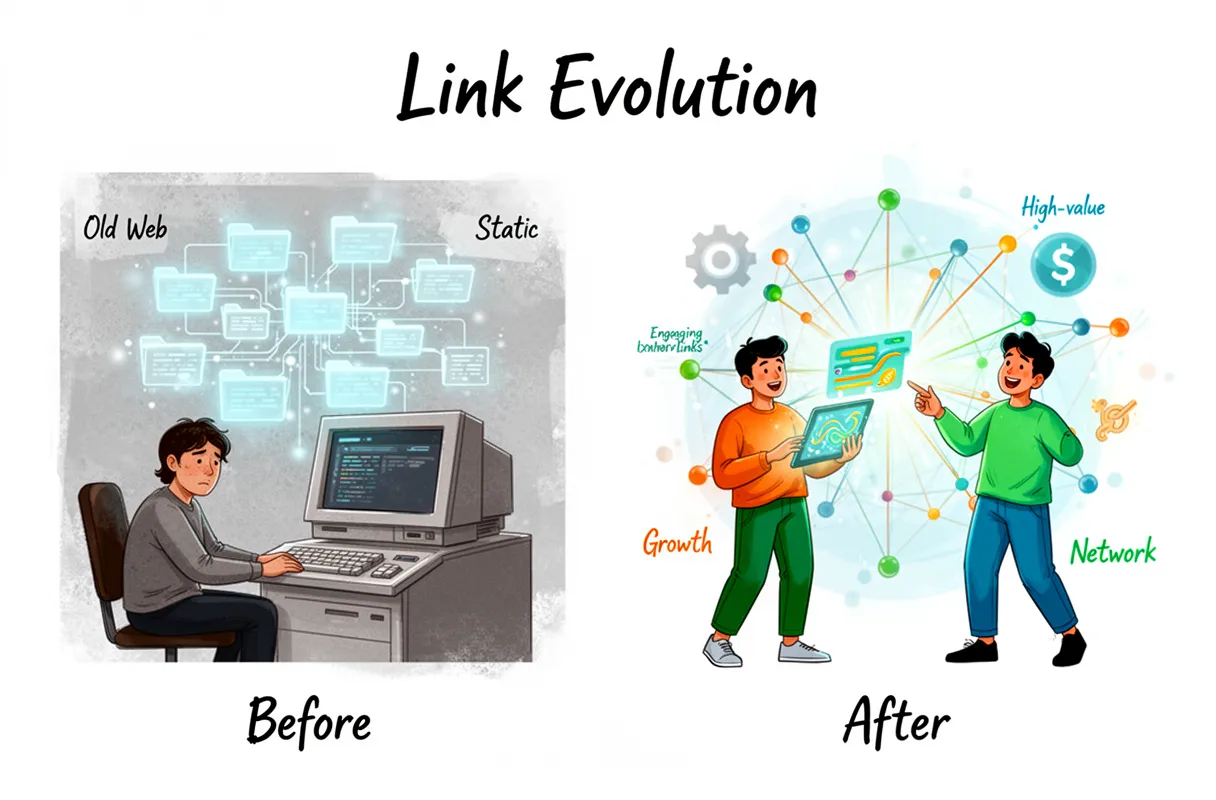
Directory submissions are far from dead; instead, they serve a specific, strategic role in modern SEO, particularly for absolute zero domains and new startups. For these fresh online presences, moderated business and startup directories act as foundational trust signals, helping search engines like Google discover and understand your website.
Think of it as initial introductions. When you launch, search engines might not know you exist. Submitting to established, niche directories can significantly increase crawl frequency for new sites.
This increased crawling directly impacts indexing delays, shortening the time it takes for your pages to appear in search results. Our own data from client launches shows that sites listed on quality directories often see their core pages indexed up to 30% faster compared to unlisted counterparts.
This isn't about massive PageRank boosts. It’s about establishing a baseline authority and ensuring initial discovery. You are essentially telling search engines, "Hey, I'm a legitimate business in this industry, and here's proof."
For a deeper dive into how these listings still carry weight, especially for a new website, you might want to explore why directory backlinks remain valuable for SEO in today's landscape.
Why guest blogging remains a high-authority tactic
Guest blogging remains a high-authority SEO tactic because it secures editorial backlinks from established, relevant websites, functioning as powerful search engine endorsements. These endorsements signal to Google that your site is a credible, valuable resource within your specific niche. This direct association with trusted domains significantly enhances your own perceived authority.
Even with constant algorithm updates and the growth of AI content, well-executed guest posts reliably deliver measurable ROI. They fulfill Google's core requirements for relevance, authority, and quality by linking your content to reputable sources. We’ve seen our clients achieve significant jumps in organic visibility when deploying a strategic guest blogging campaign.
Beyond SEO, strategic guest contributions generate direct referral traffic to your site. Readers engaged with the host's content often convert into active users for your platform. This method directly impacts brand awareness, placing your product in front of a new, targeted audience who might not discover you otherwise. The continued relevance of guest blogging in modern SEO is widely confirmed; for instance, a detailed analysis on search engine land reinforces its efficacy.
Directory submission vs guest blogging comparison
Deciding between directory submission and guest blogging isn't about picking a single winner; it’s about aligning each tactic with your startup's current needs and available resource allocation. Both offer distinct benefits, but their impact on ranking potential and ROI varies significantly based on your growth stage.
You wouldn't use a hammer for a screw, and you wouldn't use a screwdriver for a nail. The same logic applies here.
AspectDirectory SubmissionGuest BloggingPrimary GoalFoundational visibility, local SEO signalsHigh-authority backlinks, targeted referral trafficImmediate ImpactQuicker indexing, baseline trust, early discoveryNiche audience exposure, direct brand endorsementLong-term BenefitConsistent brand mentions, local relevance buildingSustained domain authority, enhanced organic rankingsResource AllocationLower time investment (often automated or templated)Higher time/financial investment (outreach, content)ROI FocusEarly traction, discoverability, SEO hygieneLink equity, conversion-ready traffic, thought leadershipIdeal Startup ScenarioBrand new sites, local businesses, budget-consciousEstablished content, seeking competitive edge, scaling authority
Directory submissions offer a fast track to initial online presence. When your startup is fresh out of the gate, submitting to relevant directories quickly signals your existence to search engines and potential customers. This helps establish fundamental E-E-A-T (Experience, Expertise, Authoritativeness, Trustworthiness) without demanding extensive content creation. We've found that early-stage founders see a predictable, if modest, ranking impact from this foundational work.
Guest blogging, in contrast, builds authority with a much deeper ranking impact. It connects your brand to established voices in your niche. You gain not just a backlink, but an endorsement from a trusted source, driving a higher ROI through qualified traffic and stronger SEO signals. This approach requires more significant resource allocation, including expert content creation and strategic outreach.
For a new startup, consider your immediate objectives. Do you need quick validation and initial discovery, or are you ready to invest in building significant domain authority? Understanding this difference helps you make smarter choices for your marketing spend.
Ranking potential and link strength
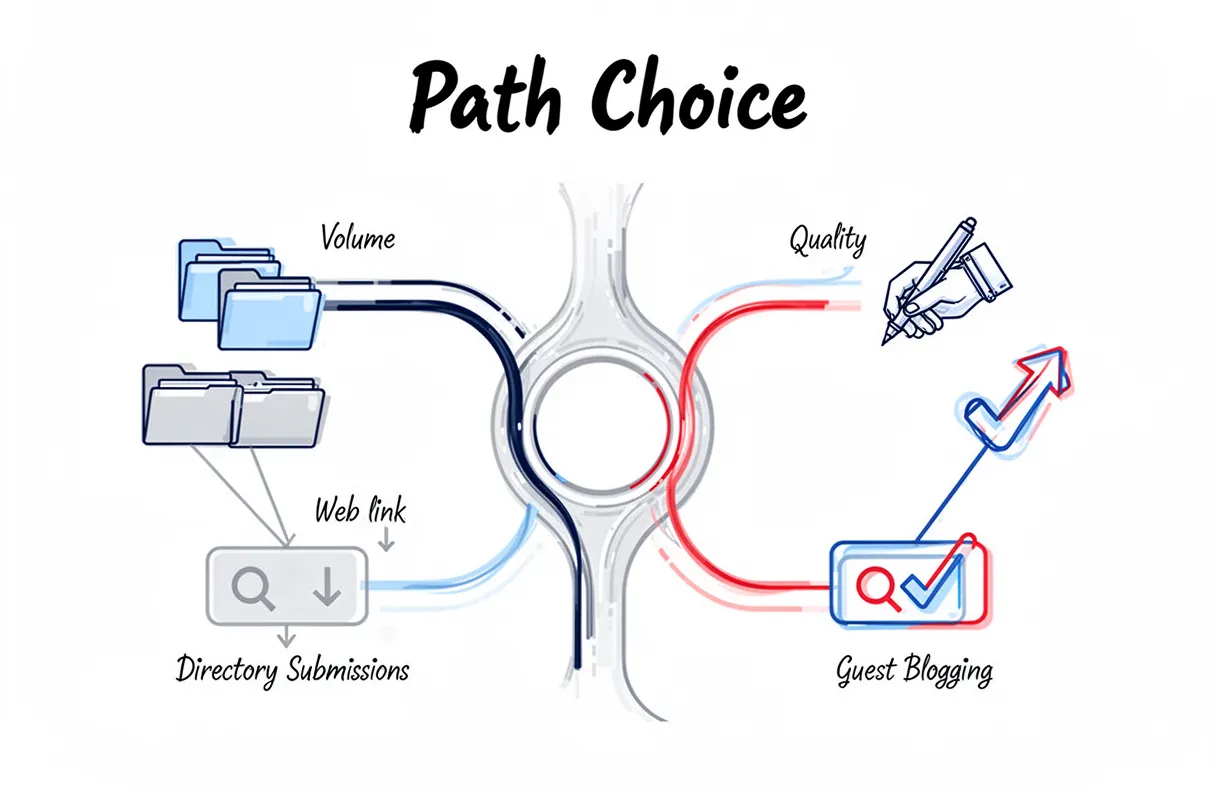
Guest blog links consistently carry significantly more ranking power than directory submissions for organic search. Guest posts offer contextual backlinks embedded directly within valuable, relevant content. This provides a strong signal of authority and topical relevance to search engines like Google.
These links are often editorially reviewed, acting as a genuine endorsement from another reputable site. Such high-quality placements directly improve your overall domain authority. They are powerful ranking factors that drive significant upward movement in SERPs.
Directory submissions, conversely, provide essential foundational signals. They establish your business's online presence and confirm basic entity recognition across the web. These links contribute to your initial visibility and local relevance.
However, directory links rarely propel your site to top SERP positions alone. They act as an important baseline for SEO hygiene. They signal that your business exists, but don't typically transmit the same deep link equity or ranking strength as a well-placed guest post. This is a fundamental difference in their algorithmic value.
Focus your link-building budget on acquiring links that provide the highest tangible impact. Understand that not all links are created equal.
Cost and time investment requirements
The financial and time commitments for these two SEO strategies differ significantly, directly impacting your resource allocation. Guest blogging demands a heavier investment in both time and money for tangible results.
This approach involves an extensive outreach process to identify relevant, high-authority sites. Then, you craft compelling pitches and develop original, high-quality content that aligns with the host's audience and editorial standards.
You can expect to pay for content creation, which often ranges from $100-$500 per article for skilled writers. Furthermore, some high-traffic, niche-specific sites may charge direct placement fees for guest posts.
According to data on link building pricing, acquiring a single high-quality guest post link can cost anywhere from $250 to over $1,000, reflecting the extensive effort involved. This is an investment in direct authority.
Directory submissions, conversely, typically require less financial outlay. Many directories offer free basic listings, though some charge small, annual fees for enhanced profiles.
The primary investment here is time, particularly for manual submission. Each directory requires you to navigate their platform and fill out forms with your business details, a task that can become tedious and repetitive when scaling.
Specialized services, like our platform at LaunchDirectories, drastically reduce this manual burden. They streamline the submission process, turning what could be hours of repetitive work into a far more efficient task. But even with automation, the value per link is different.
How to identify high quality directories for your startup
Identifying high-quality directories for your startup involves scrutinizing their editorial standards, domain authority, and audience relevance. A truly valuable directory offers more than just a link; it provides targeted visibility to users already searching for solutions like yours. You need platforms that filter out spam, ensuring your listing appears alongside reputable companies.
We streamline this complex process, ensuring your submission efforts land on impactful platforms. Our approach focuses on strategic placement, not just sheer volume. This means we prioritize directories known for active moderation and a strong organic search presence.
Here's how we ensure your startup lands in the right places:
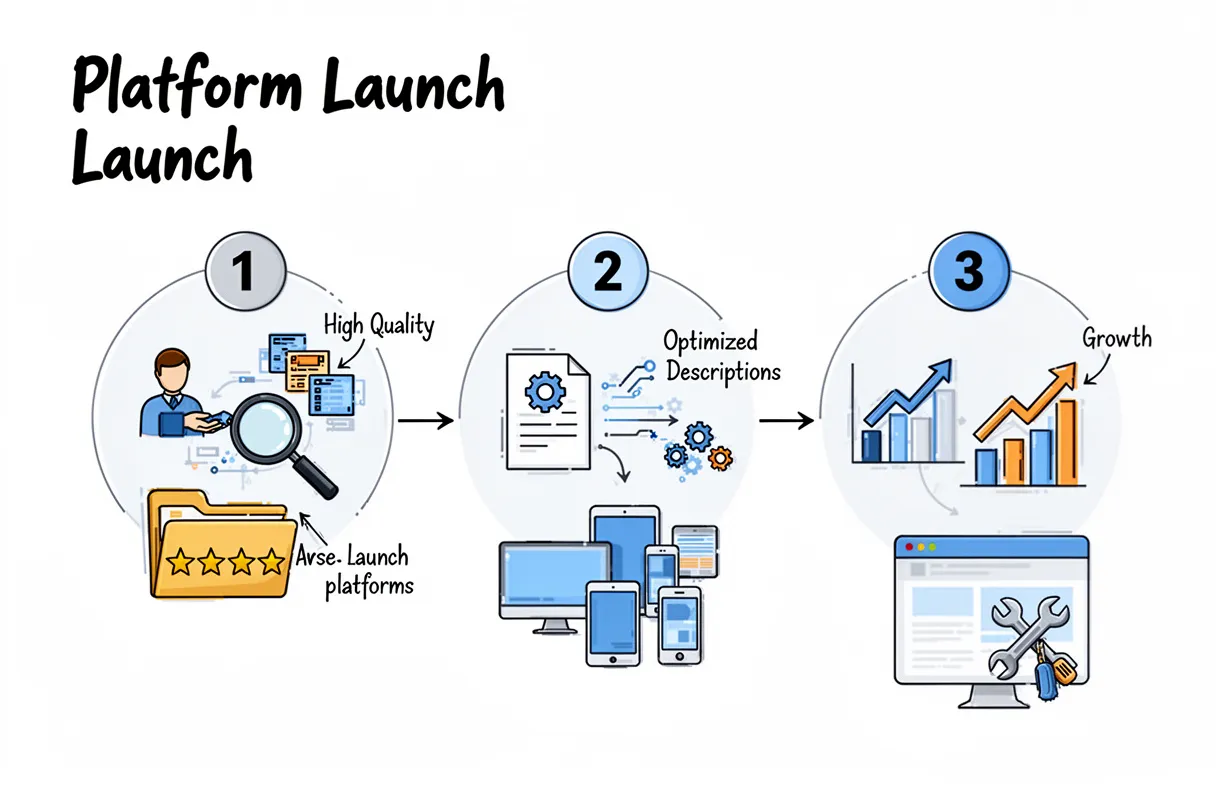
- Define Product & Goals: You provide us with your product details, ideal customer profile, and specific launch objectives. This includes details like target keywords and competitor insights.
- Target Directory Identification: We identify relevant, high-authority startup directories and niche-specific launch platforms that align with your industry and audience. This involves checking domain rating, traffic, and editorial guidelines.
- Craft Optimized Submissions: Our team prepares a comprehensive submission package. This includes unique, optimized descriptions tailored for each platform, ensuring your entry stands out and attracts relevant clicks.
- Manage & Distribute: We manage the entire submission process across your chosen, pre-vetted platforms. This saves you valuable time otherwise spent on repetitive data entry.
- Track & Follow-Up: Submissions are tracked diligently. We conduct follow-ups with directory editors as needed, ensuring your listing goes live promptly and accurately.
For optimal results from these directory and launch platform efforts, proper preparation of your landing page is crucial. It must be conversion-ready, matching the messaging used in your submissions.
Signs of a spammy directory to avoid
You identify a spammy directory by recognizing specific red flags that signal low quality and potential harm to your SEO. These platforms often prioritize quantity over credibility, failing to offer any genuine value. Avoiding them protects your site from association with unmoderated sites and "link farms."
Here are the critical signs you should watch for:
- Instant Approval & No Moderation: A directory offering immediate, automatic listing without any human review is a massive red flag. Good directories manually vet submissions.
- Lack of Niche Relevance: If a directory accepts every type of business under the sun, it lacks focus. Quality directories target specific industries (e.g., "SaaS startups," "fintech companies") to ensure niche relevance.
- "Link Farm" Aesthetics: Look for pages cluttered with countless outbound links, many of which may be broken or point to irrelevant, low-quality sites. This is a classic sign of a link farm.
- Outdated Design & Functionality: Many spammy directories appear neglected. They have broken links, dead-end pages, or a design that hasn't been updated in years.
- Excessive Advertising: Overwhelming ads, pop-ups, or banners can indicate a site primarily focused on ad revenue, not quality content or curated listings.
- Generic Descriptions or Missing Information: Check existing listings. If they're all generic, short, or lack key business information, the directory isn't serious about quality.
- No Clear Editorial Team or Contact Info: Reputable directories proudly display who curates them and offer easy ways to contact support. Absence of this information is suspicious.
- Charging High Fees for Basic Listings: While some high-quality directories charge for premium placements, be wary of those demanding significant fees just for a basic, unverified listing.
Choosing wisely means evaluating the directory itself with a critical eye. Remember, a single bad link can undermine weeks of effort, especially for a new startup. Prioritize platforms with active moderation and a clear value proposition.
The value of human-curated launch platforms
Human-curated launch platforms like Product Hunt or specialized SaaS lists offer far more than simple web directories: they provide verified exposure and powerful contextual backlinks. For SaaS founders, these platforms act as industry endorsements. They signal to both users and search engines that your product meets a certain quality standard.
These aren't just lists; they are curated lists where a human team reviews your submission. This vetting process inherently boosts the perceived value of your listing. It's a stamp of approval from an influential source within your niche.
You gain a highly targeted audience actively seeking new products in your specific sector. This directly translates to immediate traffic and early adopter engagement. But there's also a significant SEO upside.
The links from these reputable sites pass substantial authority, creating high-quality backlinks that genuinely move the needle for your domain rating. They tell Google that other respected entities in your space trust your solution.
When you're evaluating options, especially when looking into directory submission services for startups, understand this difference. It's not just about getting a link. It's about securing endorsements from platforms that prioritize relevance and user experience.
Strategic ways to combine both methods
A truly effective link building strategy isn't about choosing between directories and guest blogging. Instead, you combine them into a tiered link building approach, where each method serves a distinct, vital purpose in your growth journey. This sequence builds foundational trust before scaling your domain's authority.
Directories, particularly high-quality, human-curated platforms, form your initial SEO base. They provide essential citations, establish early relevance, and help search engines understand your entity. Think of it as laying the concrete slab for your digital skyscraper.
Guest blogging then acts as the primary driver for authority building. By securing placements on reputable industry sites, you gain powerful editorial links and targeted referral traffic. This is where you construct the higher floors, adding significant weight and visibility.
This holistic SEO strategy recognizes that a strong foundation supports aggressive growth. You don't try to place 100-story guest post links on a site with no base. That's a recipe for instability, (and potential Google scrutiny).
Initially, focus on getting your startup listed in relevant, quality directories. This quickly broadens your digital footprint and signals early trust to algorithms. It's about presence and basic validation.
Once that baseline is solid, shift resources towards strategic guest posting. This pushes your domain rating higher, positions you as a thought leader, and attracts more specialized audiences. Your content reaches the right eyes.
And always remember the quality. A few strong guest posts outperform dozens of low-tier directory links. The combination, however, is a force multiplier for predictable growth.
Phase 1: Building foundation with directories
For new domains, establishing a foundational link profile with directories is the essential first step to signal legitimacy to search engines. You gain crucial early citations, helping algorithms understand your entity and its relevance within your niche. This initial groundwork is vital for startups operating from "absolute zero" authority.
Directories provide a broad digital footprint, acting as early validation points for your business. Think of them as the initial pin drops on the internet's map for your brand. This presence ensures basic discoverability and contributes to your brand's overall online visibility.
When you're starting, every signal counts. Directory submissions offer those critical first legitimacy signals that major search engines like Google look for. They help confirm your business actually exists and operates within a specific industry.
We recommend focusing on high-quality, human-curated platforms. These aren't the spammy link farms of old. Instead, they are trusted resources that provide genuine value to users looking for specific services or products.
Effective directory submission services like ours specialize in identifying these reputable platforms. This allows you to quickly build a foundational link profile without wasting time on ineffective or harmful sites. And it sets the stage for more advanced link-building efforts.
This phase isn't about massive ranking boosts. It's about establishing a stable, trustworthy base. You’re telling the internet, "Here I am, and I'm a real business."
Phase 2: Scaling authority with guest blogging
Guest blogging becomes your next major focus once your website is indexed and holds a foundational Domain Rating (DR). This strategic shift leverages your established legitimacy from directories, paving the way for more impactful, targeted link acquisition.
You need that initial credibility to open doors. Pitching high-authority sites with a brand new, unindexed domain is often a waste of time. Your outreach strategy gains traction when your site already signals some trust.
This phase is all about amplifying your niche authority. You're not just listed; you're contributing valuable content to established industry voices. This positions your brand as a thought leader, not just another startup.
Your Domain Rating (DR) from the directory phase is your new calling card. It tells potential collaborators that your site is a legitimate entity, making your guest post pitches far more appealing. Publishers want to link to credible sources.
But it's not just about the link. Guest blogging drives targeted referral traffic directly to your site. These aren't random visitors; they are readers already engaged with content relevant to your product or service.
Crafting an effective outreach strategy involves identifying platforms that genuinely serve your target audience. Look for sites with strong engagement, a clear editorial process, and a high domain rating themselves.
You must personalize every pitch. Generic emails fail. Focus on how your unique insights will benefit their readers, offering a piece of genuinely valuable content.
As your DR grows, so does your access to even higher-tier publications. This creates a virtuous cycle: better guest posts lead to higher DR, which enables even better guest posts.
Shift your resources now. Invest in developing compelling content and a meticulous outreach strategy to secure placements that elevate your niche authority.
Measurable results from combined campaigns
Combining strategic directory submissions with targeted guest blogging directly translates into quantifiable SEO growth, boosting your site's authority and market visibility faster than either tactic alone. This tiered approach is engineered for founders focused on predictable, measurable returns.
Your Domain Authority (DA) often sees a noticeable boost within weeks of successful, human-curated directory placements. This initial signal of legitimacy is crucial for gaining Google's trust and often results in faster indexing of your core pages.
That foundational DA then acts as leverage. You can then pitch higher-tier publications for guest posts, which in turn passes stronger link equity back to your site. This amplifies your existing authority, propelling your site toward top-tier keyword rankings.
We consistently observe clients moving from unranked to page one for specific long-tail keywords within 3-6 months by executing this two-phase strategy. The directory links provide initial traction; guest posts deliver the powerful, niche-specific signals.
This isn't just about links; it's about optimizing your SEO ROI. You invest strategically, first in broad visibility, then in targeted authority. This minimizes wasted effort on low-impact tactics.
The synergy ensures that every guest post you land carries more weight, building on an already credible foundation. This approach sidesteps the common pitfall of new sites struggling for visibility.
You gain a competitive edge by systematically building legitimacy. Instead of hoping for rankings, you implement a clear, two-stage process with definable milestones.
Focus on tracking your DA progress and specific keyword ranking improvements closely. These metrics will validate your combined campaign's effectiveness.
Common myths about modern directory submissions
Modern directory submissions are far from dead; instead, the strategy has evolved significantly, making many common SEO myths outdated and dangerous for new startups. The truth is, legitimate directories still offer valuable foundational signals.
Many founders mistakenly believe directory links are inherently spammy backlinks. This myth stems from past manipulative tactics.
- Myth 1: Directory submissions are dead. This is false. While broad, low-quality directories are indeed worthless, human-curated directories specific to your industry or niche still provide legitimate value. They build initial brand visibility.
- Myth 2: All directory links are spammy. Not true. The line differentiates between legitimate business listings and toxic, automated link schemes. A quality directory lists your business accurately, often manually reviewed, and serves as a genuine reference point online.
Spammy practices are distinct. They include irrelevant submissions, reliance on exact-match anchor text for every link, or participation in automated tiered link schemes. These actions can certainly invite penalties.
Your focus should be on relevance and quality. A link from a reputable, category-specific directory signals legitimacy to Google.
- Myth 3: You need aggressive anchor text optimization. For directories, avoid this. Over-optimizing directory links with exact-match keywords is a red flag, contributing to spammy backlinks.
Instead, prioritize branded anchors (e.g., "LaunchDirectories") or naked URLs (e.g., "https://launchdirectories.com"). Directory submissions are primarily for brand mentions and foundational trust, not for direct keyword manipulation through anchors. They help establish your entity online.
Do directory links still pass PageRank?
Directory links still pass PageRank, but not in the way they did in the late 1990s or early 2000s. Google’s algorithm has matured significantly, shifting the emphasis from raw link quantity to highly relevant, high-quality links.
You won't see a massive, direct surge in keyword rankings purely from directory submissions anymore. That old-school, manipulative approach is dead.
What you do gain is link equity and crucial discovery value, especially from human-reviewed, niche-specific platforms. These aren't about direct PageRank power for rankings. They're about establishing your brand's presence.
A well-placed link from a reputable directory confirms your entity to search engines. It acts as a positive signal within a broader link profile.
Consider these links as foundational. They help build trust and contextual relevance around your brand.
For example, a submission to a curated SaaS directory tells Google you're a legitimate SaaS business. This helps solidify your topic authority.
The true value lies in the human review process. If an editor validates your submission, that’s a strong signal of legitimacy. It shows real people see your business as valuable.
But be warned: Low-quality, automated directories offer no meaningful link equity. Such links can even harm your site by associating you with spammy neighborhoods online. Focus on directories that prioritize quality over quantity.
Will guest blogging get you penalized by Google?
Ethical guest blogging, when done correctly, will not earn you a Google penalty. Google specifically targets unnatural link schemes designed solely to manipulate rankings.
The risk arises when your guest post strategy devolves into a low-quality, scaled operation focused on link placement rather than genuine value.
Genuine guest posts are editorial exchanges. They demand adherence to high editorial standards. This means offering unique, insightful content to a relevant audience, not just dropping a link.
Many mistakenly conflate guest blogging with sponsored posts or paid link placements. If you pay for a link within a guest post, Google mandates you use a nofollow or sponsored attribute on that link.
Failing to disclose paid links with appropriate attributes can indeed lead to a Google penalty. Your site risks being flagged for manipulative practices.
Google's Webmaster Guidelines are explicit: "Any links intended to manipulate PageRank or a site's ranking in Google search results may be considered part of a link scheme." This includes exchanging money for links or products in exchange for links that pass PageRank.
The key is intent and transparency. Is your goal to genuinely share expertise and reach a new audience? Or is it simply to acquire backlinks, regardless of content quality?
Focus on pitching relevant sites within your niche. Craft compelling articles that provide real value to their readership (not just thinly veiled promotional pieces).
This approach builds actual authority and brand recognition. It earns links organically, which is what Google rewards.
But understand, even high-quality sites sometimes have less strict guidelines. It's your responsibility to ensure the links you acquire comply with Google's rules.
When you engage in guest blogging, ensure every pitch includes original research or fresh perspectives. This minimizes any chance of being associated with spammy backlinks.
You need to vet target sites for their own quality and relevance. If a site accepts every submission, regardless of quality, it signals a low bar and potential risk.
Your next step is to audit your existing guest blogging outreach. Are you prioritizing content quality and audience fit, or simply chasing domain authority? Shift your focus if necessary.
Answers to frequently asked questions
How quickly do directory submissions and guest posts impact my SEO?
Directory submissions can provide immediate initial visibility and faster indexing for new sites. You often see referral traffic spikes and earlier appearance in niche searches within weeks. This establishes an initial digital footprint.
Guest posting, conversely, focuses on building compounding long-term authority. While a high-quality guest post might not immediately deliver massive traffic, its impact on your site's overall backlink profile and domain rating (DR) grows steadily. This leads to sustainable ranking improvements over months.
Are directory links still safe for my backlink profile?
High-quality, human-curated directory links remain completely safe and beneficial for your SEO strategy. The risk only emerges from spammy, low-quality directories that accept anything without review. Always ensure a directory aligns with your niche and has editorial standards.
We advise you to focus on platforms where entries are manually reviewed. This protects your site's integrity and enhances your backlink profile with relevant signals. Avoid any directory that promises "instant approval" or requires minimal information.
How many guest posts should a startup aim for?
Prioritize quality over sheer quantity when it comes to guest posting. Securing even a few high-authority guest posts on relevant industry sites is far more impactful than dozens of links from weak, irrelevant blogs. One strong link can move the needle more.
Your goal should be to earn editorial backlinks from sites with strong domain authority that genuinely resonate with your target audience. Consistency is important, but focus on the impact of each placement. This strategy directly contributes to measurable startup growth.
What are the key metrics to track for both strategies?
For directory submissions, track referral traffic from the directory, new page indexing rates in Google Search Console, and any initial keyword ranking improvements. You also want to monitor the increase in your overall number of referring domains.
For guest blogging, focus on changes in your organic search visibility for target keywords, improvements in your site's Domain Rating (DR), and brand mentions. Tools like Ahrefs or Semrush help monitor new backlinks and their impact. Crucially, watch direct traffic from the guest post itself.
What common mistakes do founders make with these tactics?
A significant mistake is prioritizing speed or low cost over quality. Many founders chase quick, easy links from low-quality directories or pay for generic guest posts on irrelevant sites. This can actually harm your SEO strategy.
Another common pitfall involves neglecting ongoing maintenance. Directory submissions aren't "set and forget," and guest posting requires continuous outreach and content creation. You must consistently monitor your backlink profile for both methods.
How do I ensure my efforts contribute to actual startup growth?
You must align both directory submissions and guest blogging directly with your startup growth objectives. This means targeting directories and publications that reach your ideal customers, not just any site. Focus on gaining visibility among your actual user base.
Your content should always solve a problem for the reader. For directories, ensure your listing is detailed and compelling. For guest posts, offer unique insights. This approach ensures you're not just building links, but building a brand and attracting qualified leads. And remember, consistent monitoring and adaptation are non-negotiable for sustained success.
Which one should a new startup do first?
Directory submissions are your immediate priority for a new startup launch. They offer a faster, more cost-effective path to initial online visibility, setting crucial groundwork before more resource-intensive tactics.
You need to establish a basic digital footprint quickly. Directories provide foundational links and help search engines discover your site for early stage SEO. This is essential for proper indexing.
Guest blogging demands significant time and financial investment. It requires deep content creation, extensive outreach, and a pre-existing level of site authority for impact.
Focus first on securing those initial signals of legitimacy. These foundational directory links allow you to appear in relevant niche searches.
This method acts as a low-friction entry point into the SEO landscape. It buys you time to refine your product and understand your audience.
Once your site is consistently indexed and has a basic backlink profile, then transition to guest blogging. This strategic timing ensures your high-effort content lands on a receptive, already-visible domain.