
Top 10 Solo Founder SaaS Success Stories & Lessons 2025
Discover 10 profitable solo founder SaaS companies earning $30K-$5M+ yearly. Learn their strategies, tech stacks, and how to build your own indie SaaS in 2025.

Top 10 Indie Solo Founder SaaS in 2025: Inspiring Success Stories That Started with One Person
The solo founder movement has reached unprecedented heights in 2025. What was once considered nearly impossible—building a million-dollar SaaS company alone—has become a proven playbook for ambitious entrepreneurs. These indie makers are challenging conventional startup wisdom, proving that you don't need co-founders, venture capital, or a large team to build something remarkable.
In this article, we're diving deep into 10 incredible solo founder SaaS companies that are thriving in 2025. Each story offers unique insights, proven strategies, and inspiration for aspiring entrepreneurs ready to take the leap.
1. Nomad List – Pieter Levels
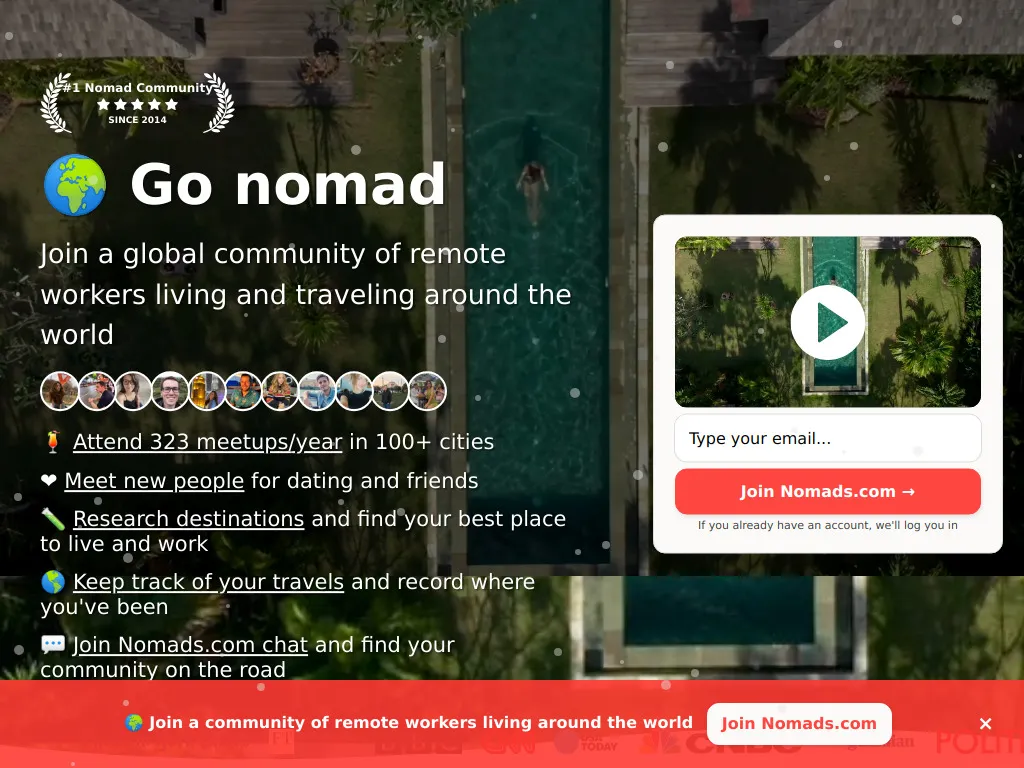
What It Does: A platform that helps digital nomads find the best places to live and work remotely, ranking cities based on cost of living, internet speed, weather, safety, and more.
Founder: Pieter Levels (@levelsio)
Website: nomadlist.com
Revenue: $5.3M in 2024 (combined with Remote OK and other projects)
Started: 2014
Tech Stack: PHP, jQuery, simple stack
The Origin Story
Pieter Levels is the poster child of the indie hacker movement. In 2014, he challenged himself to launch 12 startups in 12 months while traveling the world. Nomad List emerged from this challenge when he created a simple spreadsheet ranking cities for remote workers.
What started as a Google Spreadsheet went viral almost immediately. Levels quickly turned it into a membership community where digital nomads could connect, share tips, and find co-working spaces globally.
Key Lessons
- Ship fast, iterate faster: Levels launched Nomad List as an MVP in just 2-3 days
- Build in public: He shares revenue, metrics, and lessons openly on Twitter
- Solve your own problems: As a digital nomad himself, he understood the pain points intimately
- Leverage community: The platform became valuable because of the community it fostered
- Stay lean: Pieter has never raised funding and runs all his projects solo
Metrics That Matter
- Over 100,000 members
- $5.3M revenue across his suite of products
- Zero employees (occasionally contracts help)
- Built with simple, non-trendy tech stack
Launch your startup on startuups.com and join the next generation of makers
2. Carrd – AJ
What It Does: A simple, fully responsive one-page website builder for everything from personal profiles to landing pages.
Website: carrd.co
Revenue: $2M+ ARR
Started: 2016
Tech Stack: Custom JavaScript, lean architecture
The Origin Story
Before Carrd, AJ created free HTML templates that became massively popular. He noticed that one-page templates were particularly in demand. Rather than competing with giants like Wix or Squarespace, he deliberately constrained Carrd to just one-page sites—a brilliant positioning move.
AJ built Carrd as a solo project with no expectations beyond maybe "covering his latte costs." The product launched on Product Hunt and immediately gained traction. Word-of-mouth became the primary growth engine.
Key Lessons
- Constraints breed creativity: By limiting to one-page sites, AJ created a manageable scope
- Word-of-mouth is powerful: Carrd has done zero paid advertising
- Start with your audience: AJ had an existing following from his template work
- Freemium works: The free tier drives massive adoption; paid upgrades provide revenue
- Listen to users: Features like "sections" came from user requests and expanded use cases
Metrics That Matter
- $2M+ annual recurring revenue
- 4M+ websites created
- 800,000+ users
- Zero marketing spend
- Entirely bootstrapped
3. Bannerbear – Jon Yongfook
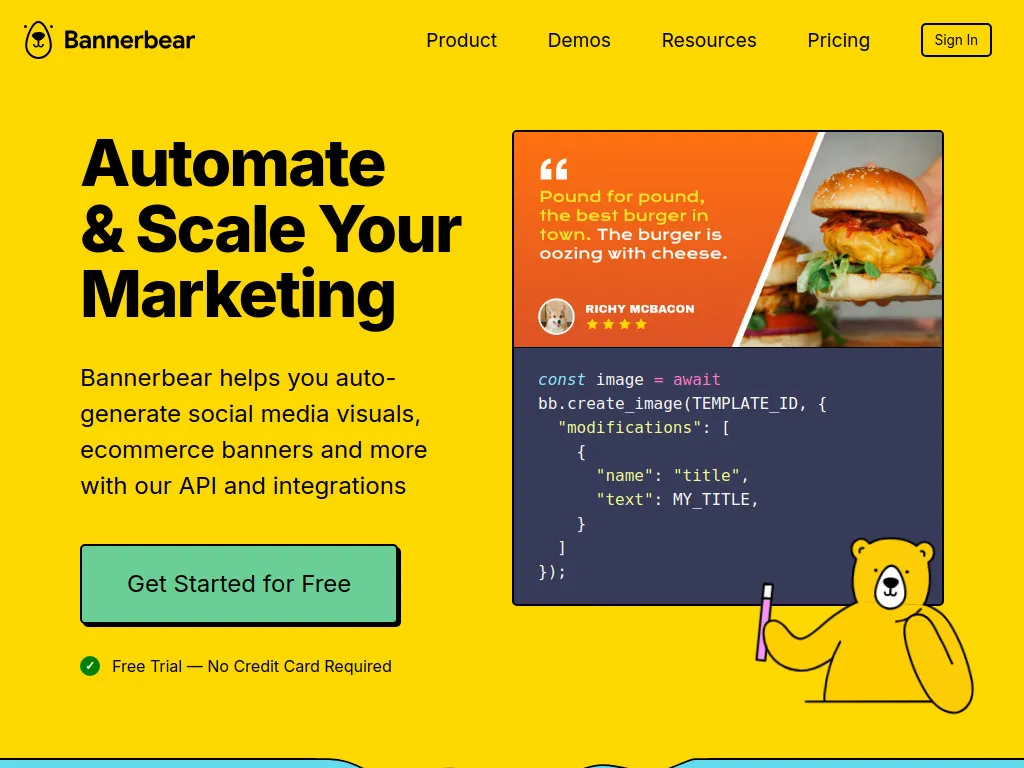
What It Does: API for automated image and video generation, perfect for social media content, e-commerce banners, and marketing visuals.
Founder: Jon Yongfook (@yongfook)
Website: bannerbear.com
Revenue: $991K in 2024
Started: 2020
Tech Stack: Ruby on Rails, AWS, Heroku
The Origin Story
Jon Yongfook was working on multiple indie hacking projects in Tokyo and found himself spending hours creating social media graphics for each one. The repetitive nature of designing hundreds of variations frustrated him.
He built Bannerbear to solve his own problem—an API that could automatically generate images from templates with dynamic data. After pivoting from an earlier version (PreviewMojo), he repositioned Bannerbear as a broader solution and relaunched on Product Hunt.
Key Lessons
- Scratch your own itch: Jon built exactly what he needed
- 50/50 rule: Split time equally between coding and marketing
- Niche up strategically: Jon expanded his target market when too narrow
- Build in public: Sharing his journey to $10K MRR went viral and brought customers
- Focus on documentation: Extensive docs and tutorials drove conversions
- Join movements: Integrating with no-code tools (Zapier, Make) expanded reach
Metrics That Matter
- Nearly $1M ARR
- 596+ paying customers
- Two customer segments: social media managers and high-volume agencies
- Bootstrapped solo
- Transparent "open startup" model
4. Plausible Analytics – Marko Saric & Uku Täht
What It Does: Privacy-first, lightweight alternative to Google Analytics that respects user privacy and doesn't use cookies.
Founders: Marko Saric & Uku Täht (co-founders, but started as solo projects)
Website: plausible.io
Revenue: $1M+ ARR
Started: 2019
Tech Stack: Elixir, Phoenix, PostgreSQL
The Origin Story
Marko and Uku came together from separate projects, both frustrated with Google Analytics' complexity and privacy issues. They built Plausible as a simple, transparent alternative that prioritizes user privacy and delivers essential metrics without bloat.
Plausible is open source, which has been central to its growth strategy. The transparency and commitment to privacy resonated strongly with developers and privacy-conscious businesses.
Key Lessons
- Privacy as a feature: Built during heightened privacy concerns (GDPR era)
- Open source builds trust: Being open source differentiated them
- Simple is powerful: Stripped away unnecessary complexity
- Content marketing works: Extensive blogging on privacy and analytics
- Bootstrapped philosophy: No VC funding, sustainable growth
Metrics That Matter
- Over $1M ARR
- Thousands of websites using it
- Open source with strong community
- Completely bootstrapped
- Profitable from early stages
5. ConvertKit – Nathan Barry
What It Does: Email marketing platform designed specifically for creators, bloggers, and online entrepreneurs.
Founder: Nathan Barry (@nathanbarry)
Website: convertkit.com
Revenue: $25M+ per year
Started: 2013
Tech Stack: Ruby on Rails
The Origin Story
Nathan Barry started with a $5,000 budget and a six-month challenge: build a $5K/month SaaS. As an author and course creator himself, he understood the limitations of tools like Mailchimp for creators.
He identified the core complaints creators had—complex workflows, poor automation for product launches, creator-unfriendly interfaces—and built ConvertKit to address them specifically.
Nathan started completely solo, doing customer development, coding, and marketing himself. Though ConvertKit has since grown into a substantial team, it began as a true solo founder story.
Key Lessons
- Solve for a specific audience: Creators, not general businesses
- Start small and focused: $5K in 6 months was the initial goal
- Customer development is crucial: Nathan talked to hundreds of potential users
- Content marketing drives growth: Blogging and teaching built authority
- Affiliate program as growth engine: Affiliates drove massive referrals
Metrics That Matter
- $25M+ annual revenue
- Started solo, now 80+ team members
- Bootstrapped to profitability before raising capital
- Thousands of creators served
6. Prerender.io – Todd Hooper
What It Does: Prerender.io helps JavaScript websites show up properly in search engines by rendering pages for bots.
Founder: Todd Hooper
Website: prerender.io
Revenue: $2.5M+ per year
Started: 2013
Tech Stack: Node.js, headless browsers
The Origin Story
Todd Hooper was a software engineer who kept encountering the same problem: JavaScript-heavy websites he built weren't showing up properly on Google. SEO for single-page apps was broken.
He created an open-source solution on GitHub that gained massive traction. Thousands of developers starred and used it. Recognizing demand, Todd turned it into a paid SaaS service that handles rendering at scale.
He worked on Prerender.io as a side project until monthly profit approached his day job salary, then went full-time.
Key Lessons
- Open source as marketing: Free version built trust and awareness
- Solve a technical pain point: Clear problem for developers
- Side project validation: Proved demand before going full-time
- Developer-focused: Simple, technical solution for technical users
- Patience pays off: Took years to build to full-time income
Metrics That Matter
- $2.5M+ ARR
- Bootstrapped from $0
- Took 5 years to scale
- Four-person team now, but started solo
- Open source core drives awareness
7. PhotoAI – Pieter Levels
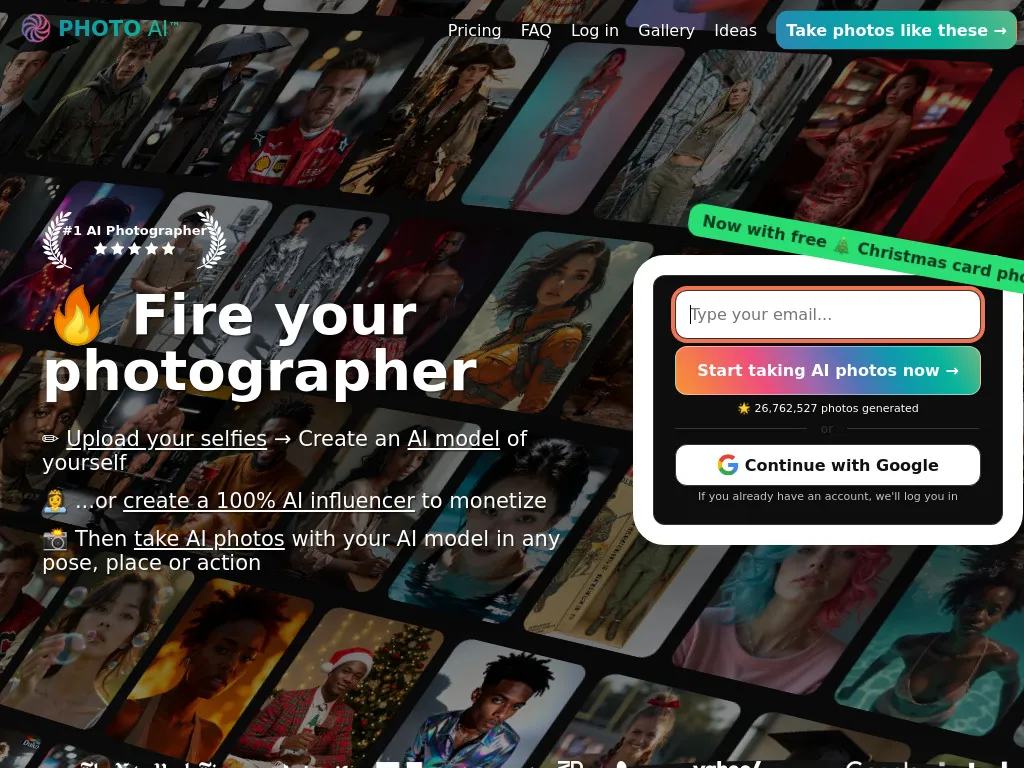
What It Does: AI-powered photo generation tool that creates professional photos of you without a photoshoot.
Founder: Pieter Levels (@levelsio)
Website: photoai.com
Revenue: Part of his $3M+ portfolio
Started: 2023
Tech Stack: AI models, GPU servers, modern web stack
The Origin Story
Pieter Levels saw the explosion of AI image generation and identified a specific use case: professional photos for LinkedIn, dating apps, and social media. Rather than generic AI art, PhotoAI creates realistic photos of actual people.
Users upload photos of themselves, and the AI generates professional-looking images in various styles and settings. It's practical AI solving a real problem people will pay for.
Key Lessons
- Ride technology waves: Spotted AI opportunity early
- Practical application: Focused on a specific, valuable use case
- Rapid execution: Launched quickly to capture market
- Portfolio approach: Part of multiple successful products
- Market positioning: AI-generated photos for real people, not art
Metrics That Matter
- Part of Pieter's $3M+ yearly revenue
- Launched in 2023, quickly gained traction
- Solo with contracted AI developer help
- Profitable from early stages
8. Leave Me Alone – James Ivings
What It Does: Helps users unsubscribe from unwanted emails in bulk and manage email subscriptions.
Founder: James Ivings (with partner Danielle, but largely solo operation)
Website: leavemealone.app
Revenue: $30K+ MRR
Started: 2019
Tech Stack: Node.js, React
The Origin Story
James and Danielle built Leave Me Alone to solve their own inbox overload problem. Everyone receives hundreds of marketing emails, and unsubscribing one-by-one is tedious.
They created a simple tool that scans your inbox, identifies subscriptions, and lets you unsubscribe in bulk. The product resonated immediately—email fatigue is universal.
Key Lessons
- Universal pain point: Everyone deals with email overload
- Simple solution: Does one thing exceptionally well
- Privacy-first: Users trust it because it's transparent about data
- Viral potential: People share it naturally
- Freemium model: Free scanning, paid for unsubscribing
Metrics That Matter
- $30K+ monthly recurring revenue
- Lean two-person operation
- Bootstrapped
- Strong word-of-mouth growth
- High customer satisfaction
9. Testimonial.to – Damon Chen
What It Does: Makes it easy to collect and display video and text testimonials from customers.
Founder: Damon Chen (@damengchen)
Website: testimonial.to
Revenue: $50K+ MRR
Started: 2020
Tech Stack: Modern web stack, video infrastructure
The Origin Story
Damon Chen identified a gap in the market: collecting testimonials was painful. Most tools were clunky, expensive, or required technical setup.
He built Testimonial.to as a dead-simple solution: create a form, share the link, customers record video or text testimonials, embed them on your site. It solves a clear marketing need with minimal friction.
Key Lessons
- Remove friction: Made testimonial collection effortless
- Clear value proposition: Social proof drives conversions
- Self-serve model: No sales calls needed
- Viral loop: Every embedded testimonial promotes the tool
- Niche focus: Does one thing perfectly
Metrics That Matter
- $50K+ monthly recurring revenue
- Thousands of businesses using it
- Solo founder
- Bootstrapped
- Strong organic growth
10. Simple Analytics – Adriaan van Rossum
What It Does: Privacy-friendly website analytics that respects visitors and doesn't use cookies.
Founder: Adriaan van Rossum (@AdriaanvRossum)
Website: simpleanalytics.com
Revenue: $50K+ MRR
Started: 2018
Tech Stack: Minimal, fast, privacy-first
The Origin Story
Adriaan was frustrated with how bloated and privacy-invasive Google Analytics had become. He wanted simple, fast analytics that respected user privacy.
Simple Analytics delivers exactly what the name promises: straightforward website metrics without complexity, cookies, or privacy concerns. It's perfect for businesses that want basic insights without legal headaches.
Key Lessons
- Privacy as positioning: Capitalized on GDPR and privacy trends
- Simplicity wins: Stripped away unnecessary features
- Developer-friendly: Easy to implement and use
- Transparent pricing: No hidden costs or complicated tiers
- Build what you need: Adriaan used it for his own sites first
Metrics That Matter
- $50K+ monthly recurring revenue
- Thousands of websites tracked
- Solo founder
- Completely bootstrapped
- Open and transparent about metrics
Common Patterns Among Successful Solo Founders
After analyzing these 10 success stories, several clear patterns emerge:
1. They Solve Their Own Problems
Almost every founder built something they personally needed. This gives them intimate knowledge of the pain point, the target audience, and what a great solution looks like.
2. They Build in Public
Transparency is a superpower. Sharing metrics, challenges, and lessons builds community, trust, and often customers.
3. They Start Small and Simple
No one tried to build the next Facebook. They focused on narrow, specific problems they could solve exceptionally well.
4. They Embrace Constraints
Limited time, no team, and small budgets forced creative solutions. Constraints bred better products.
5. They Leverage Community
Whether through Twitter, Indie Hackers, Product Hunt, or niche forums, community was central to growth.
6. They Prioritize Revenue Early
No one waited years to monetize. They started charging from day one or very early in the journey.
7. They Use Simple Tech Stacks
Fancy frameworks weren't necessary. Many used basic, proven technologies they knew well.
8. They Stay Lean
Low overhead means high margins. Many still have tiny teams or remain solo even at high revenue.
9. They Focus on One Thing
Trying to do everything leads to mediocrity. These founders mastered one specific solution.
10. They're Patient
Most took years to reach significant revenue. Overnight success is a myth.
How to Follow in Their Footsteps
Inspired to start your own solo SaaS journey? Here's your playbook:
Step 1: Find a Real Problem
Don't build solutions looking for problems. Start with a pain point you or others experience regularly. The best SaaS ideas come from frustration, not inspiration.
Step 2: Validate Before Building
Talk to potential customers. Join communities where your target audience hangs out. Confirm people will actually pay for your solution.
Step 3: Build the Simplest Version
Your first version should be embarrassingly simple. Focus on the core value proposition. Cut everything else.
Step 4: Launch Fast
Don't wait for perfection. Launch in weeks, not months. You'll learn more from real users in one day than from planning for three months.
Step 5: Market from Day One
Don't build in silence. Share your journey, write about your process, and engage with communities. Building in public creates customers.
Step 6: Talk to Every User
In the early days, every user conversation is gold. Learn why they signed up, what they struggle with, and what they'd pay more for.
Step 7: Stay Focused
You'll get dozens of feature requests. Say no to most of them. Stay laser-focused on your core value proposition.
Step 8: Charge What You're Worth
Don't underprice. If you're solving a real problem, people will pay. Many founders wish they charged more from the start.
Step 9: Build Sustainable Systems
Think about support, infrastructure, and processes from the beginning. You can't respond to every email personally forever.
Step 10: Be Patient and Consistent
Most successful solo founders took 2-3 years to reach meaningful revenue. Consistency beats intensity.
Tools and Resources for Solo Founders
Here are essential tools these founders used:
Development:
- Bubble.io, Webflow (no-code)
- Ruby on Rails, Node.js, Python (code)
- Heroku, AWS, DigitalOcean (hosting)
Payment Processing:
- Stripe (industry standard)
- Paddle (handles tax compliance)
- Lemon Squeezy (merchant of record)
Marketing:
- Twitter/X (community building)
- Product Hunt (launches)
- Indie Hackers (community)
- Reddit (niche communities)
Analytics:
- Plausible or Simple Analytics (privacy-first)
- Mixpanel (event tracking)
Email:
- ConvertKit (for creators)
- Mailchimp (basic needs)
- Buttondown (simple newsletters)
Support:
Design:
- Figma (design)
- Canva (graphics)
- Tailwind CSS (styling)
Launch Your Startup on startuups.com
Ready to share your indie SaaS with the world? Startuups.com is the launchpad for the next generation of solo founder success stories.
Get discovered by thousands of early adopters
Join a community of ambitious builders
Get feedback from real users
Drive initial traction and signups
Submit your startup today and become part of the next wave of indie success stories.
Final Thoughts
The solo founder SaaS movement isn't slowing down—it's accelerating. In 2025, the tools, communities, and proven playbooks have never been better.
You don't need venture capital. You don't need a co-founder. You don't need a team.
What you need is:
- A real problem to solve
- The commitment to ship
- The patience to iterate
- The courage to charge
- The consistency to keep going
The founders featured in this article started exactly where you are. They had doubts, made mistakes, and faced countless challenges. But they shipped, learned, and persisted.
Your solo SaaS journey starts with one small step. What will you build?